The Behavioral Epidemiology and Applied Treatment for Cardiovascular Health (BEAT) laboratory, led by Diana A. Chirinos, Ph.D. is dedicated to advancing cardiovascular health through research on psychosocial and behavioral contributors to disease risk. We focus on identifying behavioral and biological pathways that link psychosocial experiences to cardiovascular outcomes, with the ultimate goal of informing targeted interventions that reduce cardiovascular disease (CVD) burden in underserved and high-risk populations.
Our work centers on three core aims:
- Characterizing the cardiovascular risk profile of vulnerable populations;
- Identifying psychosocial factors most strongly associated with CVD risk and progression;
- Investigating the behavioral and biological mechanisms that explain these associations.
By clarifying how psychosocial experiences shape health across the lifespan, we aim to develop prevention and intervention strategies tailored to those at greatest risk.
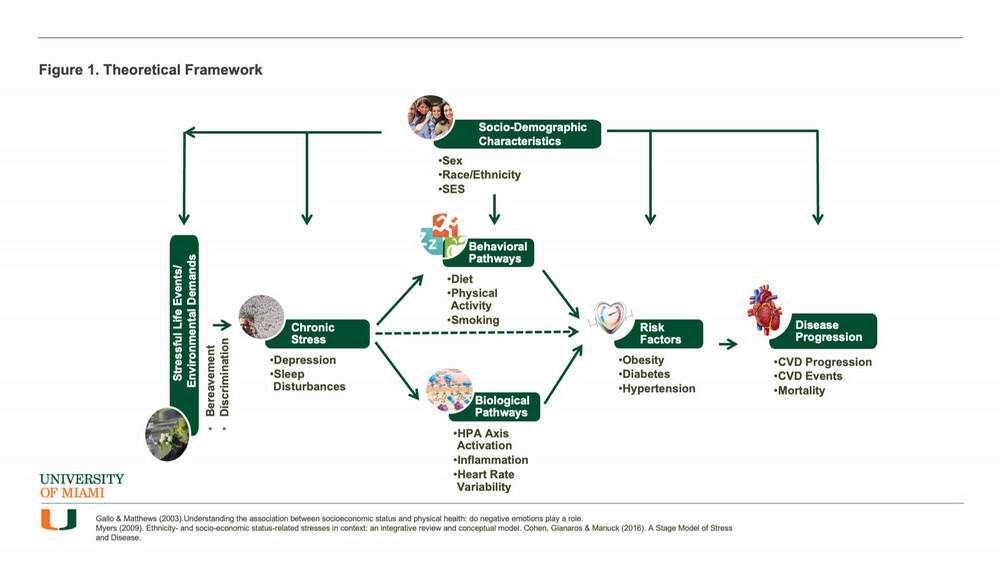
Our conceptual framework draws on theoretical models from behavioral science, psychoneuroimmunology, and physiology. In particular, the Reserve Capacity Model, the Lifespan Biopsychosocial Model of Cumulative Vulnerability and Minority Health, and the Stage Model of Stress and Disease inform our understanding of how psychosocial and contextual stressors influence cardiovascular health.
As illustrated in Figure 1, our model proposes that chronic stress—whether driven by life events or environmental demands—contributes to disease progression through behavioral and physiological pathways. Within this framework, self-regulatory processes (e.g., emotion regulation, coping capacity) may moderate these pathways, while contextual and socio-demographic factors shape all aspects of the stress–health relationship, from exposure to outcomes. This model serves as the foundation for our research program and guides the development of intervention targets.